By Samuel Bruehl and Hilla Talati
The multi-generational success of a family enterprise is deeply tied to the current generation’s ability to engage, educate, and empower the next generation. As families grow more complex across generations, the ownership and leadership models that worked for the current generation often need to be revisited and updated to support the next.
Consider a situation we often see:
As the Williams family approached the transition from the third to the fourth generation, their approach to family involvement in the business needed to change. Over the past 60 years, the Williams family had built a diversified company. The family CEO, Henry, now in his late 50s, was credited by his siblings and cousins—who were also shareholders—for growing the business beyond their expectations. The family owners trusted Henry immensely. They were kept informed but largely deferred to him and his leadership team for major decisions.
Henry recognized that this concentrated model of leadership had had its advantages: he could act decisively, and his siblings and cousins could focus on building lives outside the business. But as Henry looked at the next generation, he saw a different dynamic: these cousins were less connected and geographically dispersed along with Henry’s nieces and nephews. Given these differences, the next generation did not benefit from the same close-knit relationships and trust that had helped Henry lead the business and maintain family stability.
Henry had seen other business-owning families lose direction—or spiral into conflict—during generational transitions. He feared that without intentional preparation, his own family might face the same risks. He also knew that long-lasting family businesses depend on engaged owners.
While it wasn’t immediately obvious how to prepare the next generation for ownership—and possibly leadership—Henry understood the importance of good stewardship no matter what. He wanted the next generation to uphold the family legacy and promote the longevity of the business. For those willing and able, he also aimed to prepare them to participate in the governance of the family enterprise by serving on the company boards and in other leadership roles.
What is Henry to do?
In our experience advising family businesses, we’ve identified five successful practices for developing the next generation:
- Engage Everyone in the Next Generation—Not Just Potential Future Leaders of the enterprise
Engaging all next-generation family members helps them see themselves as part of a business-owning family, regardless of whether they plan to work in the business. Families that take a holistic approach to engagement find that next-gen members feel valued and feeling valued brings them closer to the business and each other. This strengthens the sense of community and belonging – feelings that are essential to building trust and long-term commitment to the family and the enterprise.
- Involve Spouses in Next-Generation Development
Spouses are often held at arm’s length from the family enterprise, which can cause tension and hinder development efforts of the next generation. When spouses understand and support next-generation development goals, they are more likely to encourage their children’s participation. If spouses are excluded, they may inadvertently undermine these efforts because they do not understand the purpose and might view this effort as interfering in the lives of their children, making it difficult to achieve full next-gen engagement.
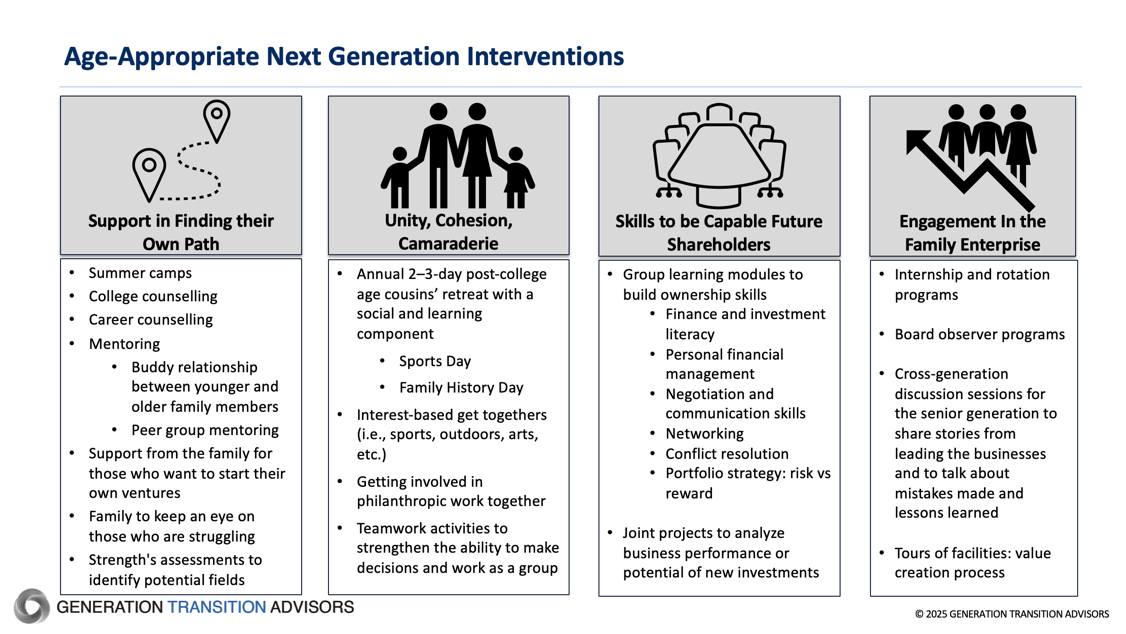
- Focus on Age-Appropriate Initiatives
Families often ask, “When is the right time to start developing the next generation?” The answer: is now! —but development efforts must be tailored to age and interests. Understanding what matters to different age cohorts within the next generation allows you to design initiatives that resonate and engage.
- Design the Future Leadership Model
Leadership models that worked in the past may not suit the future—especially during transitions from second to third or later generations. As the ownership group plans for future leadership, it’s vital to evaluate the current model and adjust as needed.
Start by defining how you believe the leadership model should evolve, then integrate this vision into your development strategy. Key considerations include:
- The senior generation’s transition timeline
- Succession plans for current family members in the business and in leadership roles for the family
- The skills and capabilities the enterprise will need
- The interests and talents of the next generation
- The roles family members are expected to fill
- Policies and guidelines for selecting next-gen leaders
- Prepare the Non-Family Organization to Accept the Next Generation
An often-overlooked component of development is the organization’s readiness to integrate next-generation family members. It’s important to think ahead about how the next generation will be introduced to the enterprise—especially as they begin their careers.
A comprehensive family employment policy can address key areas that you need to think about in preparing your organization for the next generation joining: A comprehensive approach to developing a family employment policy should cover how family members will be recruited and hired, entry points, pathways for career growth, performance evaluations, and the role of family and non-family managers and executives in overseeing family employees.
Creating a Family Employment Support Team, composed of family and non-family executives, can support implementation of your family employment policy and in parallel serve as a bridge between the family and the business to guide and support the employment of next generation family members in the business. Within the governance structures of the family enterprise this team is mostly commonly a sub-committee to a Family Council or Owner Council or a standalone governing body at the leadership level of the family enterprise.
Conclusion
Developing the next generation in family enterprises requires a strategic, inclusive, planned and flexible approach. Your family is unique and so will be your development model. The plan demands structure, intentionality, resources and a willingness to meet individuals where they are. By engaging all family members, involving spouses, preparing the organization, tailoring development to age groups, and revisiting the leadership model, families can lay a strong foundation for long-term continuity and success.
Here are four areas to focus on for next generation development initiatives.